Consumer Reports just dropped a major investigation on heavy metals in protein powder, and if you’re like me and you drink protein shakes daily, there are a few things you need to know.
First, I’m not trying to scare anyone (heavy metals in our food supply are just a fact of life), but here’s the truth: these metals have a compounding effect, known as cumulative toxicity, where toxic effects add up over time through repeated low-level exposure.
In the case of lead (which this report focused on), there are really no safe levels for consumption, and over time, chronic exposure can have serious health consequences.
So, what did the report say, and what do you need to know to keep you and your family safe if you consume protein powders? That’s what we’ll get into today.
Here are five things you need to know about lead in protein powders and shakes.

As I’ve entered my forties, I’ve noticed a shift in what my skin needs. I used to be focused on acne and breakouts, but now, it’s all about hydration, elasticity, and keeping those fine lines at bay.
I’m not someone who’s super into skincare or aesthetics, but like many of us, I do care about keeping my skin healthy as I age. That’s why I’ve added OneSkin to my routine.
The founding team at OneSkin (an all-woman group of scientists) developed a proprietary peptide called OS-01, which is scientifically proven to reduce wrinkles, boost hydration, and strengthen thinning skin.
And now they have a new product that my wife and sisters are especially excited about: The OS-01 LIP DUO, powered by their patented OS-01 peptide.
OS-01 LIP SPF protects during the day from UV and pollution, while OS-01 LIP restores at night—boosting collagen, elastin, and hydration for smoother, fuller lips over time.
Unlike typical balms, these formulas work at the cellular level to strengthen and rejuvenate.
If you’re already caring for your skin, this is the missing piece, longevity care for your lips. For a limited time, get 15% off OS-01 Lip Duo with code DHRU15 at oneskin.co. Aging is inevitable, but how your lips age is something you can actually influence.
Number 1: How They Tested the Products
Here’s a little background information on the report.
Consumer Reports tested 23 popular protein powders and ready‑to‑drink shakes (including dairy, beef, and plant sources). Each product was tested in an independent, accredited laboratory for a variety of heavy metals (including lead, cadmium, and arsenic) using multiple samples (2–3 lots) to ensure reliable results.
Because regulatory safe limits for many adults are lacking, they used California’s Proposition 65 “maximum allowable dose level” of 0.5 micrograms of lead per day as their informal benchmark. By the way, this is the strictest regulation on heavy metals in the US.
Number 2: Here’s What They Found
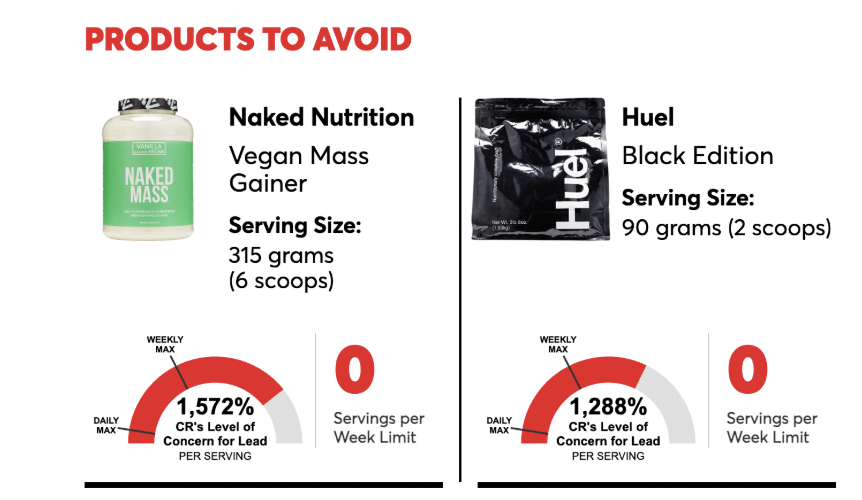
About 70 percent (roughly two‑thirds) of those products exceeded Consumer Reports’ “level of concern” for lead per serving. Plant‑based powders were the worst offenders: they averaged about 9x the lead of dairy‐based and twice that of beef‐based powders.
One plant‑based powder had 7.7 micrograms of lead in a single serving, which is 572 percent higher than the limit!
But here’s the deal: anything grown in the ground is going to have high amounts of heavy metals, including whole vegetables.
So are we going to give up eating vegetables? No. But it’s good to have some context around why plant-based proteins might have higher amounts of heavy metals.
Of course, a big distinction is that plant-based proteins are much more concentrated than a typical whole vegetable grown in the ground, which is why you see higher levels of total heavy metals, including lead, in them.
Number 3: Whey and Animal-Based Proteins Performed Better
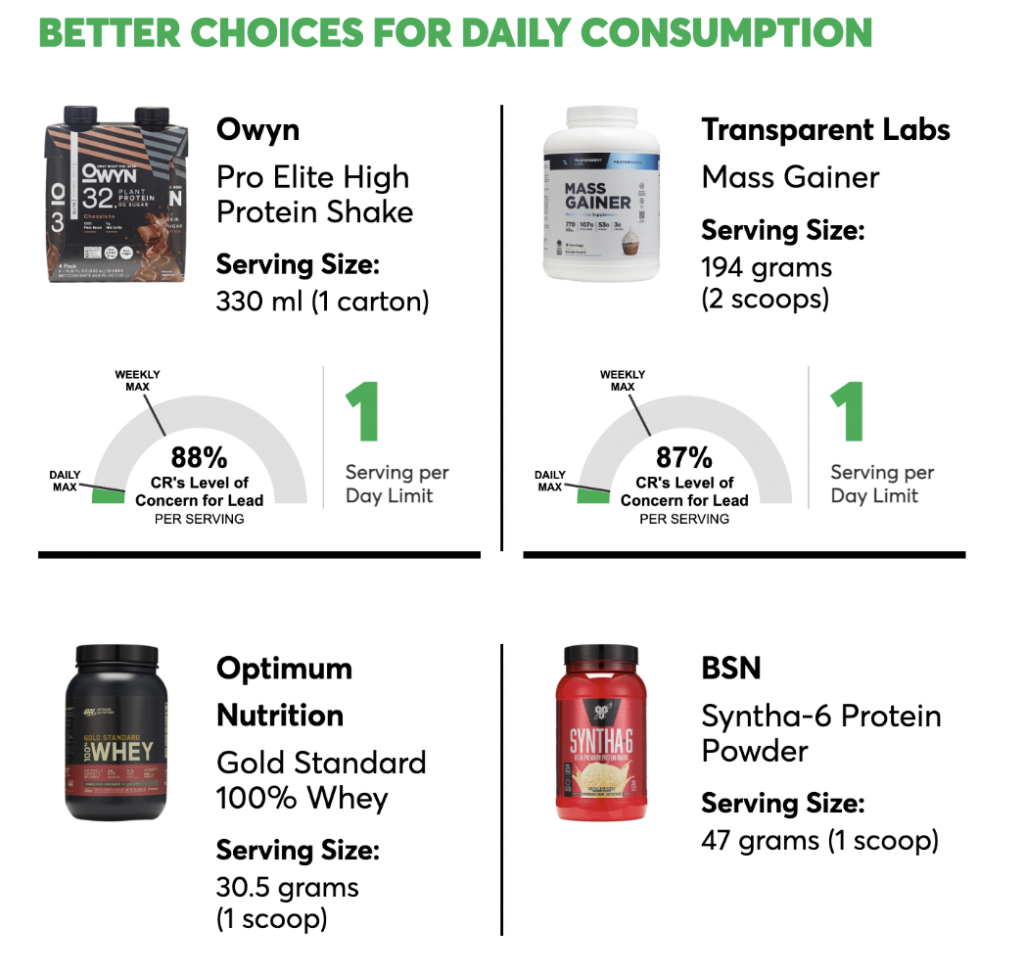
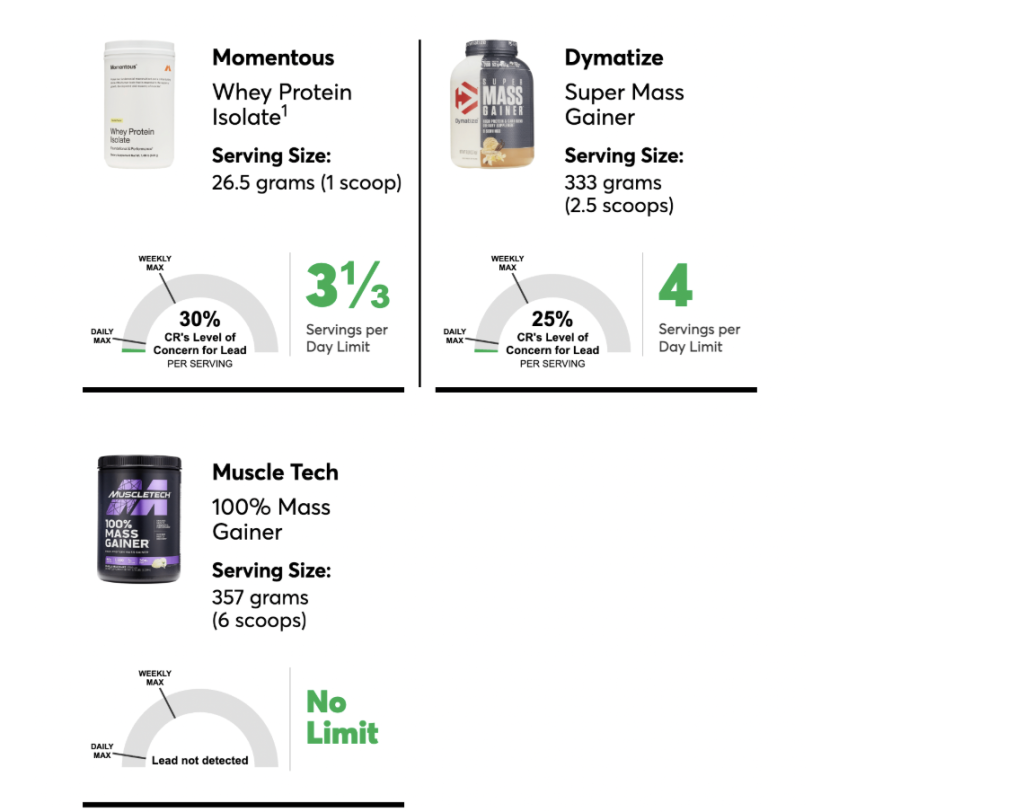
Here’s some good news: high-quality whey protein consistently ranked the lowest and did not contain high amounts of lead, and beef protein performed better than plant protein. But the beef protein tested (Equip Foods) showed higher amounts of lead in the chocolate version. This definitely tracks, considering that chocolate has (unfortunately) been shown to contain higher amounts of heavy metals.
Something else to consider is switching to vanilla or non-flavored versions of protein powders instead of chocolate. Sorry, chocolate lovers!
Number 4: If You’re Going to Choose Plant Protein, Here’s My Recommendation
I personally don’t use plant-based protein powders, but if I did, I’d use Truvani Protein Powder (I’m friends with Vani, the founder, but they’re not a sponsor or anything; this is a genuine recommendation!).
Based on past conversations with Truvani, one of the reasons they test lower in all heavy metals, but especially lead, is that they source their pea protein in a completely different way. They focus on sourcing the highest-quality peas, and they remove the outer layer of skin where most of the heavy metals are concentrated, which together results in a much cleaner product. In fact, their protein has consistently shown to test under Prop 65 safety levels.
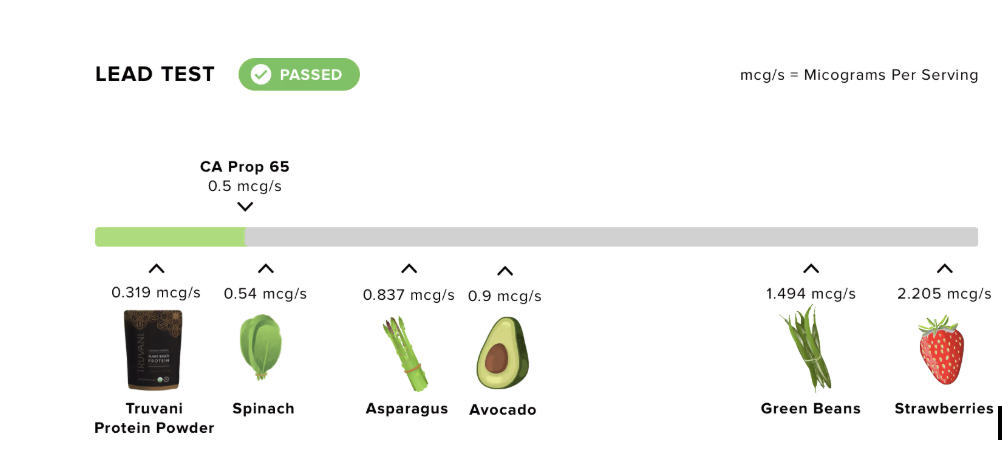
You can read more about their commitment to high-quality products here, but long story short, they test each ingredient and product lot for heavy metals and glyphosate and try to be as transparent as possible about their process and results.
Number 5: Don’t Panic!
Remember, anything grown in the ground will have some natural contamination. That doesn’t mean we should stop eating everything! The best thing we can do is stick to less-concentrated forms of heavy metals and get the bulk of our calories from real, whole foods as much as possible.
Consider the frequency with which you’re consuming these powders and make adjustments.
If you rely heavily on protein powders (like multiple times a day), try adding whole-food sources of protein back into your diet more often—eggs, meat, legumes, dairy, etc.
If you want to read more about this report and the brands they tested, which to avoid, and which are better to consume, check out the full report here. You can also learn more from the investigative reporter who led these efforts here.
See you next week for more deep dives into the latest topics I’ve been thinking about.
Here’s to your health,
Dhru Purohit