Try This community, I’m wishing you all a happy holiday season. I hope you’re spending some quality time with loved ones and doing something you enjoy.
This week, I’m diving into the true impact of air pollution (especially on the heart), why it’s never too late to live your best life (even at 90), and why so many people get sick when they are missing this one key thing!
Let’s get into it.
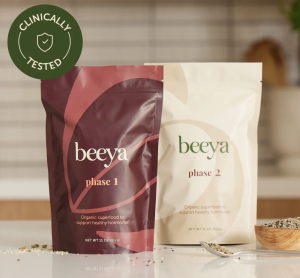
This week, I want to highlight something close to home…literally! My wife and sister co-founded a company called beeya, and what they’re doing is changing the game for women’s hormonal health.
Whether you’re navigating your cycle, going through perimenopause, or in full menopause, beeya was created to support you through symptoms like:
- Bloating
- Fatigue
- Low libido
- Insomnia
- Hormonal acne
- Cramps and irregular cycles
- Hot flashes
…and more
Their flagship product, beeya seed cycling, uses four whole, nutrient-dense seeds that naturally support hormone balance. These seeds are rich in lignans, fiber, minerals, antioxidants, and essential fatty acids. In short, they help build the raw materials your body needs to function better.
Thousands of women have reported improved energy, sleep, skin, mood, and smoother hormonal transitions.
If you’re looking for a simple, food-as-medicine approach to hormone health, check out beeya. As a special gift, Try This readers get $10 off their first subscription order — just CLICK HERE to learn more and try it for yourself! Discount will automatically be applied.
Your hormones will thank you.
Number 1: Air Pollution from the LA Fires Drove a 46% Jump in Heart Attack‑Related Emergency Visits
They said the death toll from the LA fires was 31 people. But a new study from Cedars-Sinai, which the Los Angeles Times wrote about, shows a different story.
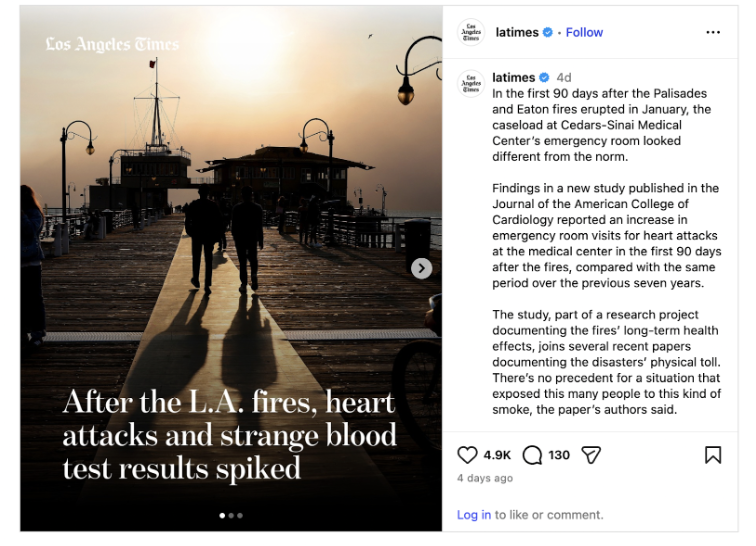
Image via @latimes on Instagram
In the 90 days after the fires, doctors at a major LA medical center saw a 46 percent jump in heart attack‑related emergency visits compared with the same time frame over the previous seven years. Respiratory illness visits also climbed by about 24 percent (which was expected with smoke exposure), but here’s something pretty alarming: abnormal blood test results more than doubled, suggesting widespread biochemical stress in people who came in with symptoms like dizziness, chest pain, or cough, even when traditional scans looked normal.
Researchers believe the toxic mix of smoke and burned plastics, vehicles, and building materials may be contributing to this unusual pattern of health effects.
What’s remarkable is that these spikes weren’t limited to people right next to the flames. Many were miles away, which shows how urban wildfires can affect a really large city like Los Angeles. Unfortunately, it seems as though smoke particles can enter the bloodstream, trigger inflammation, and strain the heart and lungs in ways we’re still trying to understand.
Earlier this year, I sat down with my friend and doctor, Elroy Vojdani, to talk about this subject and what we can do to protect ourselves from air pollution. This topic is super near to me since I live pretty close to where the fires occurred and many of my friends lost their homes.
My hope is that more and more research will come out showcasing the impact of air pollution and fires on our health and what we can do to protect ourselves. Right now, a long-term research project is digging into the effects of these fires, and I’ll definitely be following it to learn more. You can read about it here.
Number 2: This Is What Living Well at 90+ Looks Like!
Peter Attia recently shared a beautiful and inspiring article about people in their 80s, 90s, and beyond who are defying expectations and showing what aging with vitality can look like.
The bottom line is this: It’s NEVER too late to go after your dreams and goals. Let these seniors be your inspiration. Here are some of the highlights:
- Mathea Allansmith: The late‑life marathoner. At 92, Mathea completed the Honolulu Marathon. She didn’t start running until her mid‑40s, but consistency, nutritious eating, and doing what she enjoyed kept her moving into her 90s.
- Yuichiro Miura: The adventurer. A lifelong climber, Yuichiro climbed Mount Everest at 80 and later summited Mt. Fuji at 90 using adaptive gear. His drive shows that exploration and challenge don’t have a cutoff age.
- Gloria Tramontin Struck: The legend on two wheels. Riding since age 16, Gloria has logged 700,000+ miles on her motorcycle. She is now in her 80s and plans more adventures as she approaches 100.
- Ed Dwight: The 90‑year‑old astronaut. Ed became the oldest person to fly in space at age 90, proving it’s never too late to chase dreams, even those deferred for decades.
- Nancy Meherne: The surf‑loving spirit. Surfing, biking, gardening, and dancing into her 90s, Nancy lived joyfully and actively, reminding us that pleasure and movement go hand‑in‑hand.
Here’s the takeaway: What unites these lives isn’t extraordinary genetics, but consistency, curiosity, movement, purpose, and a life full of engaging activities, showing that your later decades can be rich and fulfilling, especially if you start now.
Number 3: Why Flu Season Hits at the Same Time Every Year (It’s Not What You Think)
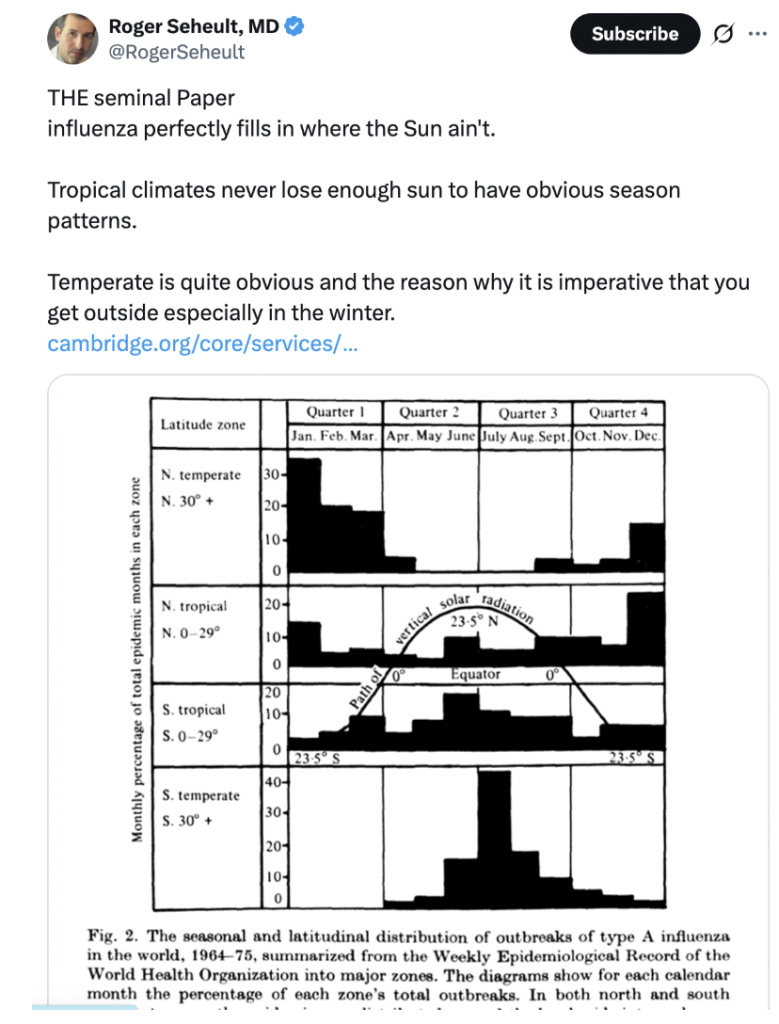
In our clip, which you can watch here, Dr. Seheult shares that in places like Australia, flu season doesn’t occur during the holidays; it’s during their winter, which is July and August. Death rates from influenza and other viruses are, in fact, highest during the shortest days of the year, a.k.a. the days with the least amount of sunlight.
In the post above, Dr. Seheult highlights a major paper that dives into the role of sunlight on viruses, and it’s pretty fascinating. Getting regular sunlight may help your body defend against viruses and mitigate their impact on your body.
Of course, we need to do all of the major protective things during flu season, like washing our hands, keeping our distance if we or someone else is sick, eating well, and exercising, but we should also consider safe sun exposure as part of our flu-prevention protocol.
That’s it for now. Have a beautiful and restful weekend.
Much love,
Dhru Purohit
The information in this newsletter is for educational purposes only and should not be construed as medical advice; please consult a qualified healthcare professional before making any health-related decisions.